October 1, 2025
My first dollar from something I built
$36 from a stranger who bought something I built, no boss and no org chart in the way. The first dollar that was mine.
$36.
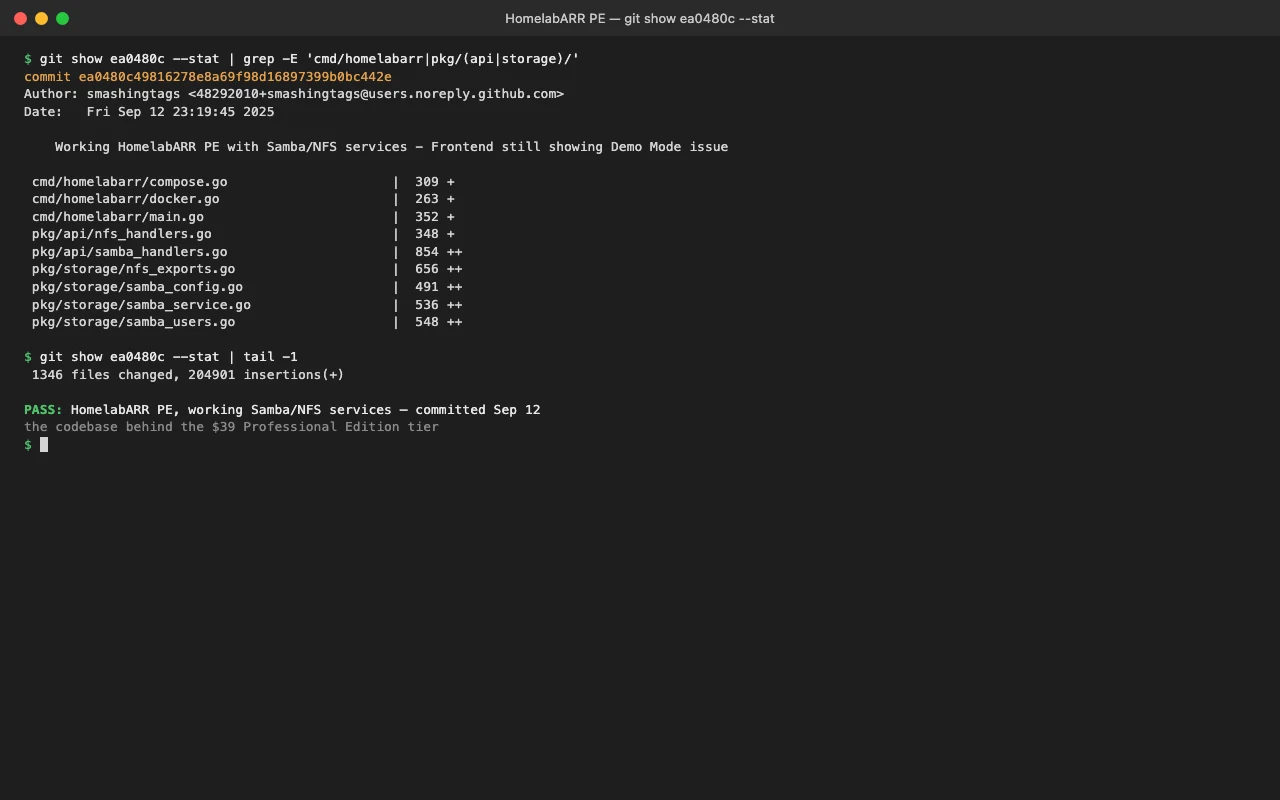
That's what the LemonSqueezy notification said. Someone in Portugal bought a license to HomelabARR PE at 2:47am on a Tuesday. I was awake, obviously, because nighttime is when I work.
I stared at the email for a solid minute, then got up, walked to the kitchen, drank a glass of water, walked back, and read it again. Someone I have never met, in a country I have never visited, had voluntarily given me money for something I made.
How it got there
HomelabARR started as that ugly dashboard I mentioned in my last post. I kept improving it. Added monitoring, service discovery, cost tracking for people running homelabs. The free version did the basics. But I kept hearing the same requests: historical data, alerting, multi-node support, export to CSV, the power-user stuff.
So I built a Professional Edition. Three tiers: $39, $79, $149 depending on how many nodes you're managing. I set up LemonSqueezy for checkout because Stripe makes me fill out forms like I'm applying for a mortgage. LemonSqueezy was painless: webhook fires, license key generates, user activates, done.
I posted the launch in a few homelab communities. Discord servers, Reddit, a Mastodon thread. No marketing budget, no ad spend. Just "hey, I built this thing, some of you helped shape it, here it is."
The three days that mattered
The first day, nothing. The second day, nothing. The third day, I started writing my resume again, just in case. I had it half done when the notification came in: $36, after LemonSqueezy's cut on the $39 tier.
What $36 actually meant
I know how this sounds. Thirty-six dollars doesn't pay rent. It doesn't pay for groceries. My parents definitely didn't high-five me about thirty-six dollars. My savings had been draining for months by this point and the trajectory was grim.
But here is what $36 meant to me.
For over a decade the only deal I knew was this: convince a company to hire me, show up every day, do what they told me, and hope they didn't decide I was too inconvenient.
This $36 was different. Nobody hired me, told me what to build, or had the standing to fire me. A person looked at a product, decided it was worth paying for, and paid. I made something useful and a stranger I will never meet bought it.
You probably think I'm being dramatic about $36. Maybe I am. But the idea that you can create value on your own lands differently. It means you don't need anyone's permission or their performance review cycle to be worth something.
What happens next
One sale is not a business. The homelab community is small, and I don't know if this is a blip or the start of something. I'm still applying to jobs. I'm still checking my bank balance more than I'd like to admit.
What I do know is that the mechanism works. Someone, somewhere, decided a thing I built was worth $39. Now I just have to do it again, and again, with more people finding it and more of them deciding it's worth the money. Plus the unglamorous parts: bug reports I have to answer, feature requests I have to weigh, the rest of actually having customers.
The moment I want to remember
I'm building a second product now, something bigger that uses everything I learned about AI coding and system design and managing complexity, and I'm keeping the details to myself for now.
But I want to remember this one: the 2:47am notification, the glass of water, the $36.
Every business starts somewhere. Mine started in a kitchen in Georgia, in the middle of the night, with a glass of tap water and a push notification from Portugal.