February 15, 2026
I got laid off and started building with AI agents
After nearly a decade in product management, I got laid off and started building HomelabARR with AI agents while I job hunt. Six months in, sales are trickling and the job search is still running.
The layoff that started everything
I didn't quit. I got laid off in July 2025 along with a bunch of other PMs when the company "restructured." Nearly a decade of product management, a CSPO certification, a track record of shipping enterprise SaaS, and suddenly I was updating my LinkedIn like everyone else.
The job hunt started immediately. PM and TPM roles, recruiter calls, the interview prep grind. I'm still running it. I want to go back to corporate. I'm good at leading teams through complexity and I miss the work.
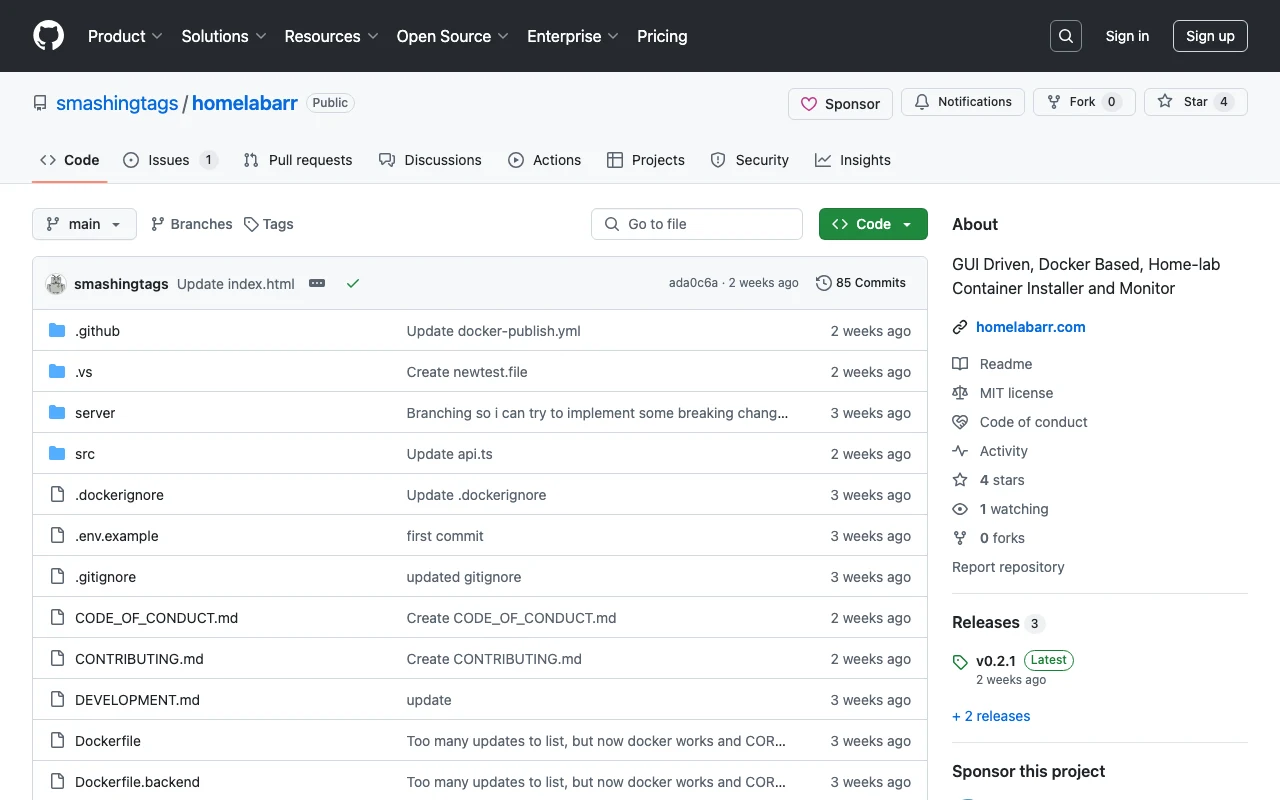
But there's a gap between applying and landing, and that gap was going to be months. I had a homelab project I'd been tinkering with for years: a Docker container manager called HomelabARR. About 200 lines of JavaScript and 8 GitHub stars. I decided to build on it during the gap. Job search by day, Go at night. If the indie work went somewhere, great. If an offer came through first, I'd take it, both tracks running in parallel.
The AI agent discovery
The first week I tried building the traditional way. Write requirements, break them into tasks, code one feature at a time. I was making progress but it was slow. I'm a PM, not a senior engineer. I can write JavaScript and Go and I understand architecture, but I'm not the person you hire to build a distributed system from scratch.
Then I started using AI coding agents, the autonomous kind, not the chatbot kind. Claude Code, plus a dispatcher I was hacking together on top of it that could take a specification, route it to the right context, and iterate until the code worked, not perfectly and not without oversight, but fast.
That's when something clicked. A PM who knows exactly what to build, paired with an AI that can actually build it, turns out to be a strong combination. All those years writing specs, defining acceptance criteria, breaking work into stories: that's the same thing AI agents need. Clear instructions with measurable outcomes. I'd been doing the prep work for this without knowing it.
Where things stand
Three weeks into building, I threw the working JavaScript backend away and rewrote HomelabARR in Go over a weekend with Claude as my pair programmer. Single binary, 100+ app templates, a web UI, Docker deployment in under a minute. I had never written Go before that weekend. The Go version was faster, cleaner, and more reliable than anything I'd built in JS.
HomelabARR PE, the paid version, went live on LemonSqueezy at the start of October. My first sale was $36 from someone in Portugal at 2:47 AM. Small numbers, but real ones.
In the months since, sales have trickled in. Not hockey-stick growth, just a trickle. The homelab community is small, but the people in it are loyal and they talk to each other. The free HomelabARR images have been on the Unraid Community Apps store for over a year now, somewhere north of 20,000 combined downloads between the backend and frontend, and that audience is where most of the feedback comes from. It has sharpened the product more than any roadmap I could have written.
Around the edges of HomelabARR I'm experimenting with other things. An iOS wellness app. A dispatcher for AI coding tasks. Documentation for how the whole workflow fits together. None of those are products yet. They're works in progress, the kind of things that come out of the gap between applying and interviewing.
The stack I'm putting together
The workflow I'm building around Claude Code isn't one AI but a handful of scoped agents, each with a specific job and a specific set of tools it's allowed to touch.
A coder that takes specs, writes code, runs tests, and has no web access so it can't go rogue. A researcher that can read the web and read my workspace but can't edit anything. A dispatcher that takes the task I give it, figures out which agent should handle it, and routes accordingly. It's early; some pieces work, others are still on paper.
The principle underneath all of it is explicit capability boundaries. The coder can't browse. The researcher can't write code. Nothing that touches production does so without me in the loop. That's mostly so I can sleep at night when an AI is anywhere near something I care about.
What the PM brain brings
The biggest thing I've learned is that the AI doesn't replace the PM. It takes over a good chunk of the engineering work. You still need someone who understands the user, defines the problem, prioritizes ruthlessly, and knows when to ship versus when to polish, which is the PM job and always has been.
I write detailed specs with acceptance criteria. I break features into stories with clear boundaries. I run retrospectives on what went wrong, even though I'm the only human in the standup. These habits translate directly to getting better output from AI agents. The more specific my instructions, the fewer iterations it takes.
A vague prompt costs me 30 minutes fixing the output afterward. A proper spec tends to work on the first pass. Years of writing specs turned out to be exactly the right preparation for this.
The hard parts nobody talks about
It's not all productivity gains and shipping speed. The isolation is real. When a deploy goes sideways at 2 AM, there's no on-call engineer to page. It's you. When a customer has a billing issue, it's you, and when the infrastructure needs an upgrade, it's you.
Revenue is slower than a salary. Four and a half months of HomelabARR PE sales so far wouldn't cover one month of my old PM salary. But the shape is different. A salary stops the day you do. Product revenue keeps building: every new customer, every blog post that pulls in organic traffic, every improvement that nudges conversion. The math works out if you survive long enough, and the job search is the other half of making sure I do.
And the AI makes mistakes, sometimes big ones. You learn fast when the stakes are real, and you put guardrails on what the agents are allowed to touch.
Would I go back?
Yes. I want a corporate TPM or senior PM role and I'm actively interviewing for one. The bank account would prefer a salary, and my brain thrives on leading teams through complexity. Program management is still what I do best, and I miss doing it at scale. Building in public is just what I'm doing until the right offer lands, not me walking away from corporate.
And I'm having a lot of fun with it. Shipping products that real people use, learning Go in a weekend, fighting Docker at 3 AM, watching a Stripe notification pop up at 2:47 AM from someone in Portugal. This is what I like to do. It's the most creatively alive I've felt in years, and every week I ship something I couldn't have shipped the week before.
It's also keeping my skills sharp. I'm running Coursera classes on the side, working through AI and cloud coursework, and reading PMBOK for fun because yes, I'm that guy. The indie work forces me to understand the full stack in a way a pure program management role never did. When I walk back into a corporate standup, I'll bring all of it with me: the engineering fluency, the AI tooling, the pattern recognition from shipping real software solo. The gap on my resume is the part where I got better.
If you're hiring a Senior TPM or a Program Lead who knows how to scope work, run ceremonies, manage delivery across teams, and is no longer afraid to get on the engineering side of the fence, reach out. [email protected].
And if you're a PM thinking about the indie path while you're hunting: your skills transfer more directly than you think. You already know how to define problems, scope solutions, and measure outcomes. AI agents give you the execution layer you've been missing, and that combination is genuinely powerful. Build during the gap. It'll make you better on the other side of it, whichever side you end up on.