September 18, 2025
What do you build when you have nothing?
I could never answer the party question about what I do. The honest version: I ship real software, with AI doing the typing and me doing the judgment.
The honest inventory
A month after getting fired, I sat down and took inventory. Not the inspirational kind where you list your strengths and visualize success. The kind where you figure out what you actually have.
Money: about $5,000 left after the initial panic spending stopped, enough for maybe two months if I was careful.
Skills: nearly a decade of project management. Scrum, Kanban, SAFe, Waterfall. I'd run them all. I could write a PRD, manage a backlog, run a sprint, and deliver a release. I could read code well enough to review it, but I could not write it.
Hardware: a homelab that had consumed an embarrassing amount of money over the years. Two Dell R730XD servers, a Mac Mini, a full networking stack, 34+ Docker containers running everything from Plex to Grafana to Home Assistant, all of it configured, documented, and maintained.
Network: a few hundred people in homelab Discord servers who knew me as "the PGBlitz guy" or "the Docker guy," not a following so much as a reputation in a niche.
Liabilities: a kid who needed stability. Parents who were generous but worried, and zero income.
The inventory was not encouraging.
The homelab advantage
The homelab was the only thing on the list that could become something. Not because the servers are worth much. Used R730XDs go for a few hundred bucks. It mattered because of what running them had taught me.
Five years of homelabbing meant I understood Docker at a level most developers don't. Not just docker run. Networking, volumes, reverse proxies, health checks, multi-host orchestration, automated backups, monitoring stacks. I'd built and rebuilt my setup dozens of times. I knew where every tool failed and what was missing.
I also knew what the community needed. I'd lived through the PGBlitz collapse and helped reconstruct the project. I'd watched people struggle with the same problems over and over: mixed drive sizes, Docker management complexity, the gap between "I have hardware" and "I have a working system."
The problems were clear. I just couldn't build the solutions, because I couldn't code.
The AI discovery
I'd been using ChatGPT to help with YAML configs and Docker Compose files. That was the extent of my "coding." Asking an AI to generate configuration files and then debugging them when they didn't work, clunky but functional.
Then I found bolt.new. Then bolt.diy. Then Copilot. Then DeepSeek. Then Ollama for running local models. I tried every AI coding tool I could find, burning through free tiers and trial periods.
Eventually I landed on Claude. I paid $200 a month for it, a significant chunk of my dwindling savings. But something was different. Claude didn't just generate code, it could hold context. I could describe a system architecture and it would implement it. I could write a spec the way I'd write a Jira ticket, with acceptance criteria, edge cases, and dependencies, and Claude would produce code that matched the spec.
That was the moment. A specific moment where I understood: I can write specs better than most developers, and AI can turn specs into code. The gap between "I know what to build" and "it exists" had just collapsed.
Nearly a decade of project management wasn't useless after all. The world was full of people who could code but couldn't scope. I could scope but couldn't code. AI bridged the gap from my side of the river.
The first thing
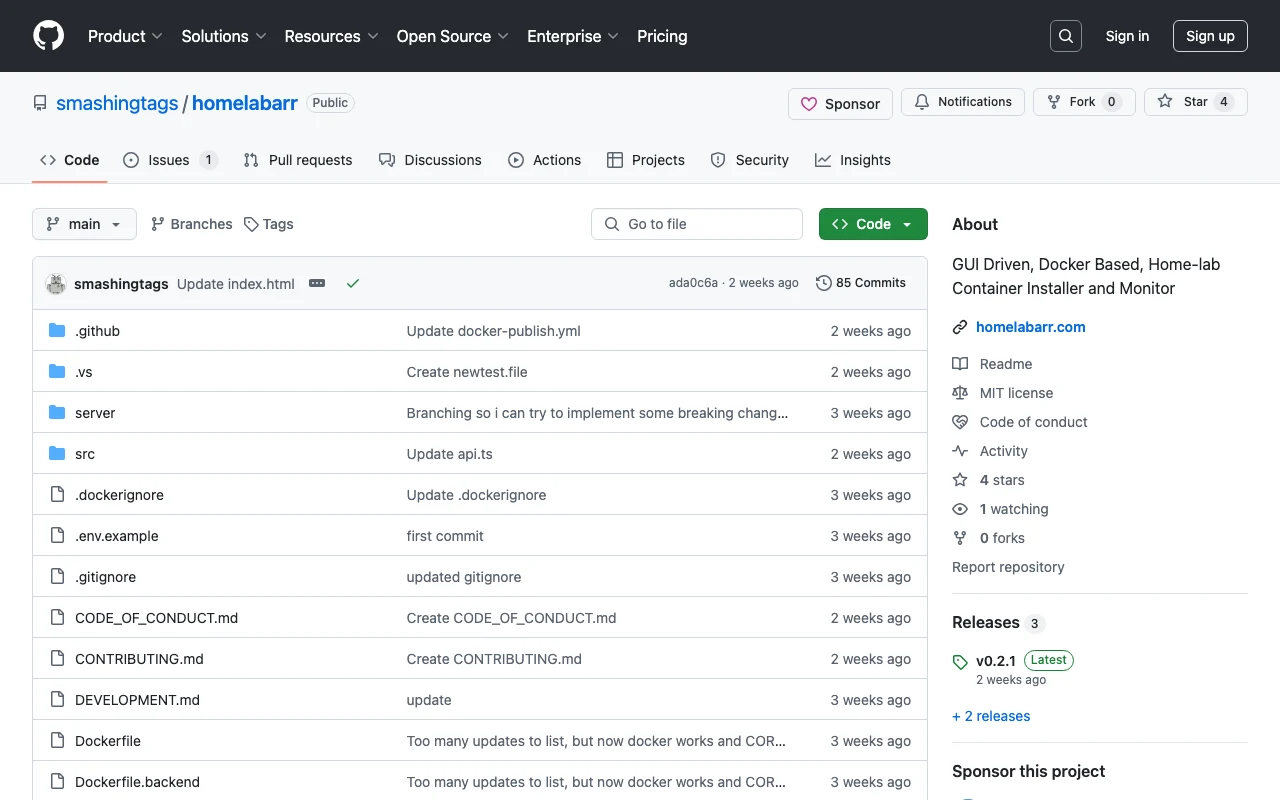
The first thing I built was HomelabARR CE, a Docker container management interface — though "built" undersells where it came from: it descends from the PlexGuide and Dockserver scripts the community and I rescued when PGBlitz collapsed, not from a blank repo. I picked it not because it was the best business idea, but because it was the thing I understood most deeply and the thing the community needed most urgently.
I started with a JavaScript frontend that talked to the Docker socket. It was ugly. The code was a mess. But it rendered a list of containers, let you start and stop them, and showed basic stats. I pushed it to GitHub and posted it in a homelab Discord.
People used it. Not many of them, but a few did. They filed issues. They asked for features. They told me what was broken. I took their feedback, wrote specs, fed them to Claude, and iterated. The PM cycle of gather requirements, prioritize, scope, deliver, repeat worked exactly the same as it did in enterprise. The only difference was that AI was the engineering team.
Within a month, CE had a full catalog of pre-configured apps, a clean dashboard, and a growing user base. I was shipping weekly. Not because I'm a fast coder, because I'm not a coder at all. I'm a fast decision-maker, and AI is a fast implementer. The combination is obscenely productive.
What I learned about starting from nothing
Your weird obsession is your market. I spent years homelabbing because I loved it. That obsession gave me deep domain knowledge in a market that was underserved. The thing you can't stop tinkering with is probably the thing you should build for.
You don't need to code, you need to scope. You need to know what "done" looks like. You need to describe a system clearly enough that an AI, or a junior developer, or a contractor, can implement it. If you can write a clear ticket, you can build software.
Ship the ugly version. The first version of HomelabARR was embarrassing. I shipped it anyway. The feedback from those first users was worth more than another month of polish. Software nobody sees is worth less than ugly software that people actually use.
Nothing starts as zero. I thought I had nothing. I had a homelab, a community, years of PM skills, and a habit of seeing systems. None of that showed up on a balance sheet, but it was the raw material for everything that came after.