March 18, 2026
Why self-hosted AI agents are the future of automation
Forget cloud-locked AI. The real revolution in automation is happening with self-hosted AI agents. Here
The cloud lock-in problem
When everyone started talking about AI, the first move from big tech was to herd us into their cloud. Send us your data, pay per token, trust the black box. For a while it made sense. The models were hard to run yourself, and the cloud was the easy button. But the easy button has a bill attached, and you do not see it until later: vendor lock-in, data privacy you cannot audit, and pricing that changes when it suits them and not you. I have watched this happen for most of my career.
That matters most for the processes you actually depend on. I do not want my core automation tied to a third party's uptime, their next pricing email, and whatever they decide their API should do this quarter. Especially not when the data going through it is sensitive or the workflow is something I built and they did not.
Enter self-hosted AI agents
The alternative is self-hosted AI agents, running on my own hardware, under my own control. I keep the parts that matter on a box I own and leave the rest to the cloud. The data stays local. The cost is something I can predict. And I can wire the agents into my own tools without asking anyone's permission.
I run most of my own operations on a stack of self-hosted agents behind OpenClaw, the agent gateway I run and extend. That setup gives me control and privacy that a pure cloud product cannot. I can swap in a new model, point an agent at an internal tool, and try something stupid on a Tuesday night, all without hitting a rate limit or paying an egress fee to find out it did not work.
For what it is worth, my local model stack is honest about what it is. The models I run are fine-tunes and abliterations of open-weight bases, not models I trained from scratch. A small router model decides which tool to call, a larger conversational model writes the answer. That is the right tradeoff for a home box: small enough to run on hardware I already own, good enough to be useful, and mine to change.
Benefits beyond privacy
Privacy is the headline, but it is not the only reason. Self-hosting also buys you:
- Once the hardware is paid for, the running cost is mostly electricity and the occasional afternoon of maintenance, not a metered bill that grows with usage.
- Local agents skip the round trip to someone else's data center, which helps a lot for anything that iterates fast or chews through data in a loop.
- You can point an agent at an obscure API, a weird internal database, or a one-off script, and nobody has to approve it first.
- You set the perimeter, and your data does not leave it unless you decide it should.
- You can run a new open-weight model the day it drops without worrying about per-token cost or whether a vendor will ever support it.
This is not an enterprise-only move. A solo builder or a small team gets more out of it than anyone, because the flexibility is worth more when you cannot throw money at the problem.
The OpenClaw advantage
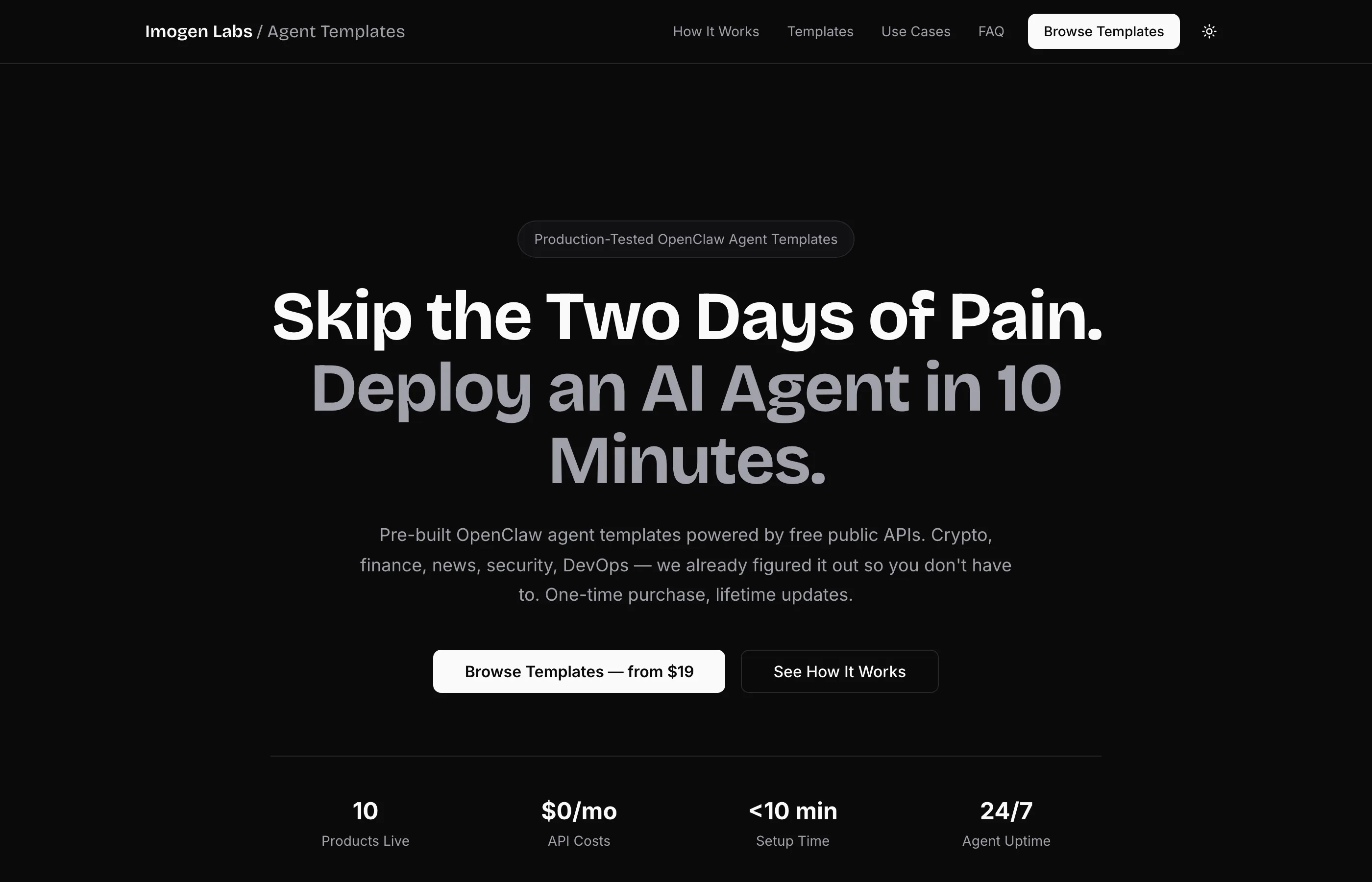
Running Imogen Labs on this stack taught me the value of it the hard way, by depending on it daily. OpenClaw is built so that I can deploy and extend my own agents instead of renting someone else's. The premise is simple: the automation should answer to me, on my hardware, on my terms.
The setup has a learning curve, and the first weekend is a grind. But it pays off. You end up with an automation layer that is private, resilient, and actually yours, instead of a dependency you rent and hope nobody reprices, which is where I think this is heading.